
E²IMPART
An action research project carried out with women millet producers in self-help groups across Koraput district, Odisha.
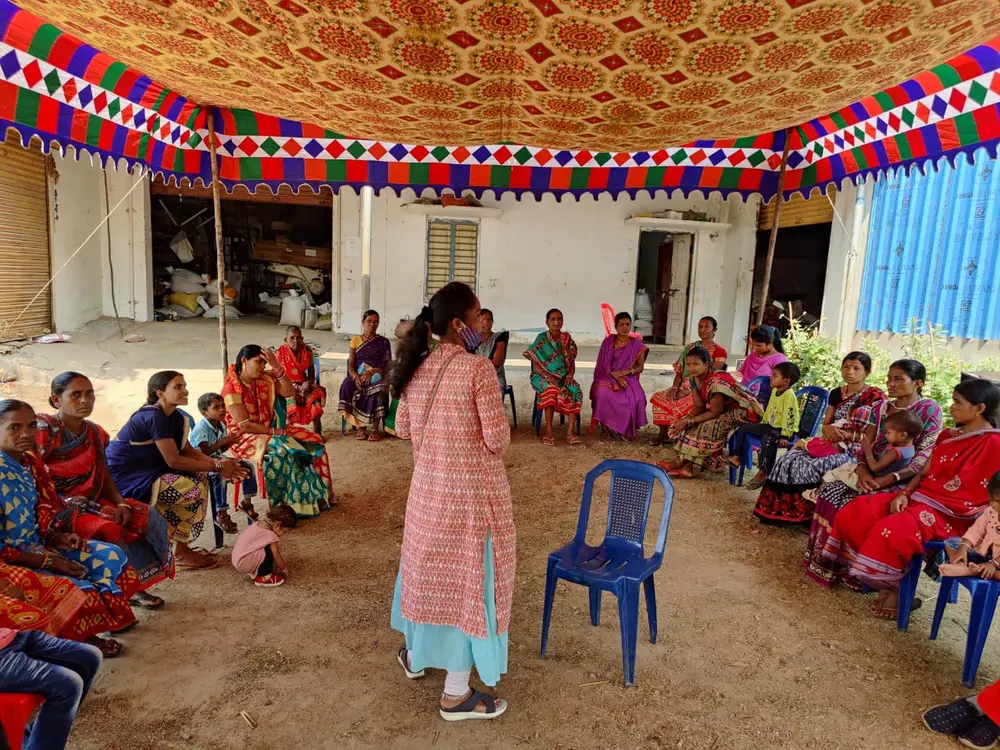
E²IMPART tested whether helping women's self-help groups in Koraput to process millet, and to develop value-added millet products, would grow their enterprises and improve their empowerment and household welfare.
The evidence was produced to help the Odisha Millet Mission (OMM) further develop its strategy for promoting millet enterprises through women's collectives, and to inform other government initiatives that aim to improve rural livelihoods through women's collectives.
Why millets
Millets are among the earliest domesticated crops and are essential to the tribal communities of Odisha, including finger millet and little millet. They are nutrient-rich, resource-efficient and well suited to less fertile highlands.
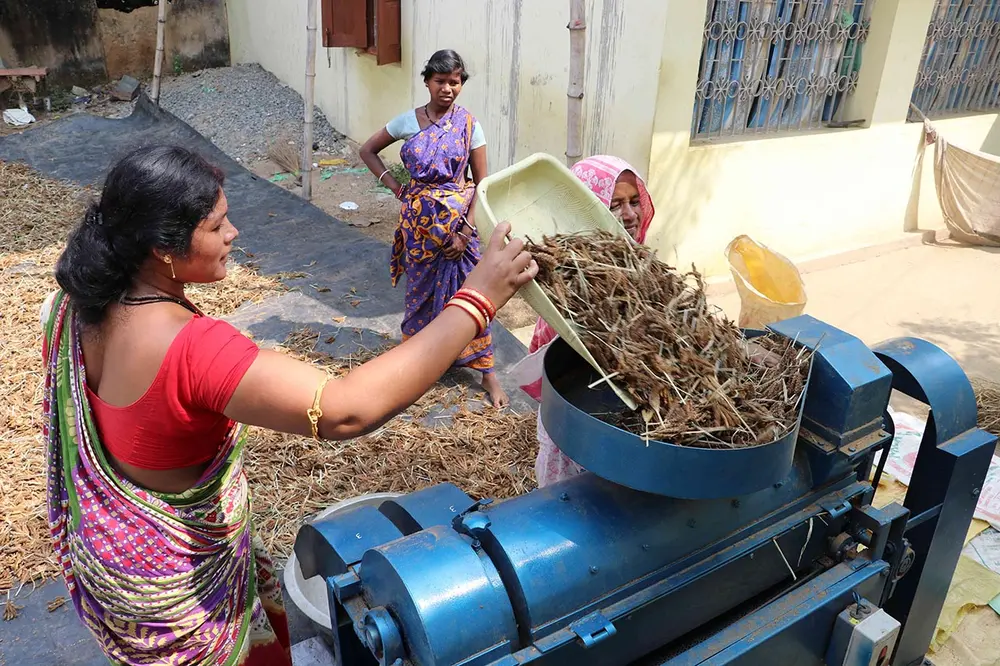
However, the drudgery involved in processing millets, together with limited access to mechanised technologies, has contributed to a decline in millet consumption. In some regions, rice has replaced millets as a staple food.
Watch the project overview
With Dr Apurba Shee, Dinesh Balam, Somyashree Tripathy, Anup Kar and self-help group members.
Who is involved
E²IMPART is led by the Natural Resources Institute of the University of Greenwich, with various partner organisations in India.
- Natural Resources Institute, University of Greenwich, UK
- Watershed Support Services and Activities Network (WASSAN), India
- Nabakrushna Choudhury Centre for Development Studies (NCDS), India
- Indira Gandhi Institute of Development Research, India
- University of Kent, UK
- Brunel University London, UK
With special thanks to the Odisha Livelihoods Mission (OLM) for their generous support.